
Core Networking

Core Networking

CISCO : how IGRP make large INTERNETWORKS

The Interior Gateway Routing Protocol (IGRP) is a routing protocol to provide routing within an autonomous system (AS). In the mid-1980s, the most popular interior routing protocol was the Routing Information Protocol (RIP). Although RIP was quite useful forrouting within small- to moderate-sized, relatively homogeneous internetworks, its limits were being pushed by network growth.
The popularity of Cisco routers and the robustness of IGRP encouraged many organizations with large internetworks to replace RIP with IGRP. Cisco developed Enhanced IGRP in the early 1990s to improve the operating efficiency of IGRP.

IGRP
is a distance vector Interior Gateway Protocol (IGP). Distance vector routing protocols mathematically compare routes using some measurement of distance. Distance vector routing protocols are often contrasted with link-state routing protocols, which send local connection information to all nodes in the internetwork.
To provide additional flexibility, IGRP permits multipath routing. Dual equal-bandwidth lines can run a single stream of traffic in round-robin fashion, with automatic switchover to the second line if one line goes down. Multiple paths can have unequal metrics yet still be valid multipath routes.

IGRP Protocol Characteristics:

IGRP is a distance-vector interior gateway protocol (IGP).
Distance-vector routing protocols call for each router to send all or a portion of its routing table in a routingupdate message at regular intervals to each of its neighboring routers. As routing information proliferates through the network, routers can calculate distances to all nodes within the internetwork.
Distance-vector routing protocols are often contrasted with link-state routing protocols, which send local connection information to all nodes in the internetwork.

To provide additional flexibility, IGRP permits multipath routing.
Dual equal-bandwidth lines can run a single stream of traffic in round-robin fashion, with automatic switchover to the second line if one line goes down. Also, multiple paths can be used even if the metrics for the paths are different. If, for example, one path is three times better than another because its metric is three times lower, the better path will be used three times as
often. Only routes with metrics that are within a certain range of the best route are used as multiple paths.

Configuration:

A very simple configuration of IGRP can be:

Router A
RouterA# conf t
RouterA(config)# interface eth0
RouterA(config-if)# ip address 70.0.0.1 255.0.0.0
RouterA(config-if)# exit
RouterA(config)# interface serial0
RouterA(config-if)# ip address 20.30.40.2 255.255.255.252
RouterA(config-if)# exit
RouterA(config)# router igrp 1
RouterA(config-router)# redistribute connected
RouterA(config-router)# network 20.0.0.0
RouterA(config-router)# network 70.0.0.0
RouterA(config-router)# network 71.0.0.0

Router B

RouterB# conf t
RouterB(config)# interface eth0
RouterB(config-if)# ip address 71.0.0.1 255.0.0.0
RouterB(config-if)# exit
RouterB(config)# interface serial0
RouterA(config-if)# ip address 20.30.40.1 255.255.255.252
RouterA(config-if)# exit
RouterA(config)# router igrp 1
RouterA(config-router)# redistribute connected
RouterA(config-router)# network 20.0.0.0
RouterA(config-router)# network 70.0.0.0
RouterA(config-router)# network 71.0.0.0
  
READ MORE - CISCO : how IGRP make large INTERNETWORKS

DirectX an interface b/w PC hardware and Windows

At the most basic level, DirectX is an interface between the hardware in your PC and Windows itself, part of the Windows API or Application Programming Interface. When a game developer wants to play a sound file, it’s simply a case of using the correct library function. When the game runs, this calls the DirectX API, which in turn plays the sound file. The developer doesn’t need to know what type of sound card he’s dealing with, what it’s capable of, or how to talk to it. Microsoft has provided DirectX, and the sound card manufacturer has provided a DirectX-capable driver. He asks for the sound to be played, and it is – whichever machine it runs on.

From my point of view as gamer, DirectX also makes things incredibly easy – at least in theory. We install a new sound card in place of your old one, and it comes with a DirectX driver. Next time we play your favourite game we can still hear sounds and music, and we haven’t had to make any complex configuration changes.

Originally, DirectX began life as a simple toolkit:
early hardware was limited and only the most basic graphical functions were required. As hardware and software has evolved in complexity, so has DirectX. It’s now much more than a graphical toolkit, and the term has come to encompass a massive selection of routines which deal with all sorts of hardware communication. For example, the DirectInput routines can deal with all sorts of input devices, from simple two-button mice to complex flight joysticks. Other parts include DirectSound for audio devices and DirectPlay provides a toolkit for online or multiplayer gaming such as networking.
READ MORE - DirectX an interface b/w PC hardware and Windows

CISCO Solutions Provide

Cisco Network Systems are the foundation for the services and applications to realize the potential of business. Cisco switches, routers, and software together, create an inherently intelligent integrated network to adapt current and future business needs by:
  1. Providing secure, but unconstrained, connectivity between employees, customers and information
  2. Delivering quality, real-time applications, such as voice and video, on a converged network platform
  3. Ensuring access to information and resources from anywhere
  4. Automating a manageable and self-defending network
  5. Reducing operating expenses
Cisco solutions for business security provide advanced visibility and control. By enforcing business policies and protecting critical assets, a Cisco Self-Defending Network help organization to:
  1. Minimize security and compliance IT risk
  2. Reduce the IT administrative burden
  3. Lower total cost of ownership

Cisco Self-Defending Network provide:
  1. Help ensure compliance with security regulations
  2. Protect against data leakage
  3. Defend against botnets
READ MORE - CISCO Solutions Provide

Importance of BANDWIDTH in DSL Internet Connections

Most hosting companies offer a variety of bandwidth options in their plans. So exactly what is bandwidth as it relates to web hosting? Put simply, bandwidth is the amount of traffic that is allowed to occur between your web site and the rest of the internet. The amount of bandwidth a hosting company can provide is determined by their network connections, both internal to their data center and external to the public internet.

Network Connectivity

The internet, in the most simplest of terms, is a group of millions of computers connected by networks. These connections within the internet can be large or small depending upon the cabling and equipment that is used at a particular internet location. It is the size of each network connection that determines how much bandwidth is available. For example, if you use a DSL connection to connect to the internet, you have 1.54 Mega bits (Mb) of bandwidth. Bandwidth therefore is measured in bits (a single 0 or 1). Bits are grouped in bytes which form words, text, and other information that is transferred between your computer and the internet.

If you have a DSL connection to the internet, you have dedicated bandwidth between your computer and your internet provider. But your internet provider may have thousands of DSL connections to their location. All of these connection aggregate at your internet provider who then has their own dedicated connection to the internet (or multiple connections) which is much larger than your single connection. They must have enough bandwidth to serve your computing needs as well as all of their other customers. So while you have a 1.54Mb connection to your internet provider, your internet provider may have a 255Mb connection to the internet so it can accommodate your needs and up to 166 other users (255/1.54).

Traffic

A very simple analogy to use to understand bandwidth and traffic is to think of highways and cars. Bandwidth is the number of lanes on the highway and traffic is the number of cars on the highway. If you are the only car on a highway, you can travel very quickly. If you are stuck in the middle of rush hour, you may travel very slowly since all of the lanes are being used up.

Traffic is simply the number of bits that are transferred on network connections. It is easiest to understand traffic using examples. One Gigabyte is 2 to the 30th power (1,073,741,824) bytes. One gigabyte is equal to 1,024 megabytes. To put this in perspective, it takes one byte to store one character. Imagine 100 file cabinets in a building, each of these cabinets holds 1000 folders. Each folder has 100 papers. Each paper contains 100 characters - A GB is all the characters in the building. An MP3 song is about 4MB, the same song in wav format is about 40MB, a full length movie can be 800MB to 1000MB (1000MB = 1GB).

If you were to transfer this MP3 song from a web site to your computer, you would create 4MB of traffic between the web site you are downloading from and your computer. Depending upon the network connection between the web site and the internet, the transfer may occur very quickly, or it could take time if other people are also downloading files at the same time. If, for example, the web site you download from has a 10MB connection to the internet, and you are the only person accessing that web site to download your MP3, your 4MB file will be the only traffic on that web site. However, if three people are all downloading that same MP at the same time, 12MB (3 x 4MB) of traffic has been created. Because in this example, the host only has 10MB of bandwidth, someone will have to wait. The network equipment at the hosting company will cycle through each person downloading the file and transfer a small portion at a time so each person's file transfer can take place, but the transfer for everyone downloading the file will be slower. If 100 people all came to the site and downloaded the MP3 at the same time, the transfers would be extremely slow. If the host wanted to decrease the time it took to download files simultaneously, it could increase the bandwidth of their internet connection (at a cost due to upgrading equipment).

Hosting Bandwidth

In the example above, we discussed traffic in terms of downloading an MP3 file. However, each time you visit a web site, you are creating traffic, because in order to view that web page on your computer, the web page is first downloaded to your computer (between the web site and you) which is then displayed using your browser software (Internet Explorer, Netscape, etc.) . The page itself is simply a file that creates traffic just like the MP3 file in the example above (however, a web page is usually much smaller than a music file).

A web page may be very small or large depending upon the amount of text and the number and quality of images integrated within the web page. For example, the home page for CNN.com is about 200KB (200 Kilobytes = 200,000 bytes = 1,600,000 bits). This is typically large for a web page. In comparison, Yahoo's home page is about 70KB.


How Much Bandwidth Is Enough?

It depends (don't you hate that answer). But in truth, it does. Since bandwidth is a significant determinant of hosting plan prices, you should take time to determine just how much is right for you. Almost all hosting plans have bandwidth requirements measured in months, so you need to estimate the amount of bandwidth that will be required by your site on a monthly basis

If you do not intend to provide file download capability from your site, the formula for calculating bandwidth is fairly straightforward:

Average Daily Visitors x Average Page Views x Average Page Size x 31 x Fudge Factor

If you intend to allow people to download files from your site, your bandwidth calculation should be:

[(Average Daily Visitors x Average Page Views x Average Page Size) +
(Average Daily File Downloads x Average File Size)] x 31 x Fudge Factor

Let us examine each item in the formula:

Average Daily Visitors - The number of people you expect to visit your site, on average, each day. Depending upon how you market your site, this number could be from 1 to 1,000,000.

Average Page Views - On average, the number of web pages you expect a person to view. If you have 50 web pages in your web site, an average person may only view 5 of those pages each time they visit.

Average Page Size - The average size of your web pages, in Kilobytes (KB). If you have already designed your site, you can calculate this directly.

Average Daily File Downloads - The number of downloads you expect to occur on your site. This is a function of the numbers of visitors and how many times a visitor downloads a file, on average, each day.

Average File Size - Average file size of files that are downloadable from your site. Similar to your web pages, if you already know which files can be downloaded, you can calculate this directly.

Fudge Factor - A number greater than 1. Using 1.5 would be safe, which assumes that your estimate is off by 50%. However, if you were very unsure, you could use 2 or 3 to ensure that your bandwidth requirements are more than met.

Usually, hosting plans offer bandwidth in terms of Gigabytes (GB) per month. This is why our formula takes daily averages and multiplies them by 31.
READ MORE - Importance of BANDWIDTH in DSL Internet Connections

NORTEL Visitor-Based Networking Solution

Defined as the delivery of high-speed wireline or wireless Internet access for PC or handheld devices to users in need of temporary service in public places, a Visitor-Based Network is typically deployed in environments such as hotels, convention centers, airports, press areas or other meeting spaces-either as a provider-managed service or by the enterprise itself. Nortel's VBN solution is designed to provide revenue-generating opportunities beyond network access-such as advertising, sales/promotion of core business services and multimedia delivery-resulting in a powerful engine to offer innovative and profitable services.

Nortel's Visitor-Based Networking (VBN) solution enables hospitality operators to offer flexible and value-added network access to their visitors through an in-house solution based on our fully interoperable portfolio of IP switches and WLAN devices.

With tiered, billable VBN-based data services, Nortel is revolutionizing profit potential from data as it has done in the past for voice. With the ability to identify and bill based on applications, hotels using a Nortel VBN could tap into more profitable business models. For example, it could offer business travelers corporate virtual private network connections or Internet voice as a premium service-presenting differentiable marketing opportunities for hotels with loyalty programs and corporate accounts.

In a Visitor-Based Networking service area, visitors attempting to access the Internet through a browser will get an IP address and be redirected to a customizable, secure VBN portal. At the VBN portal screen, the visitor can self-provision a variety of network services based on application content, bandwidth and security requirements. For example, the visitor may choose pay-by-bandwidth or pay-by-time services. The VBN portal provides full support of customer-initiated debit and credit card billing options as well as hotel account billing. Nortel's Visitor-Based Networking accommodates flexible service offers by "zones" within the facility—such as convention center, guest rooms and restaurant/lounge.
READ MORE - NORTEL Visitor-Based Networking Solution

Why Not Reserved IPs on Internet (STRUCTURE of an IP ADDRESS)

Every station on a PSN (packet switched network) that is based on the TCP/IP protocol (your computer is one, for example. Yes, we're referring to a host that is connected to the net) must have an IP address, so it can be identified, and information can be relayed and routed to it in an orderly fashion.

An IP address consists of a 32 bit logical address. The address is divided
into two fields:

1) The network address:
Assigned by InterNIC (Internet Network Information Center).
In fact most ISPs (internet service providers) purchase a number of addresses
and assign them individually.

2) The host address:
An address that identifies the single nodes throughout the network. It can be assigned
by the network manager, by using protocols for it such as DHCP, or the workstation itself.

[The IP networking protocol is a logically routed protocol, meaning that address 192.43.54.2
will be on the same physical wire as address 192.43.54.3 (of course this is not always true. It depends on the subnet mask of the network, but all of that can fill a text of its own)

IP address structure:


---.---.---.---

^ ^
| |
network | host

Every " --- " = 8 bits.
The first bits ===> network address
The last bits ===> host address.
with 8 bits you can present from 0-255 . (binary=(2 to the power of 8)-1)

Example:
11000010.01011010.00011111.01001010 (binary)
194.90.31.74 (decimal)

Notice the address range 127.X.X.X.
These addresses are assigned to internal use to the network device, and are
used as an application tool only. For example: 127.0.0.1, the most common one,
is called the loopback address - everything sent here goes directly back to
you, without even traveling out on the wire.
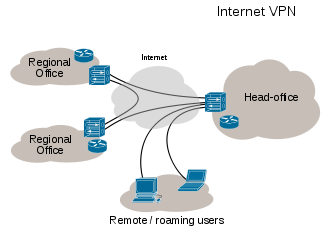
Also, some IPs are reserved for VPNs - Virtual Private Networks. These are
local area networks over wide area networks that use the Internet Protocol to communicate, and each computer inside the network is assigned with an IP address. So, suppose a certain computer wants to send a data packet to
another host on the network with the IP 'x', but there's also another host on
the Internet that has the same IP - what happens now?

So this is why we cannot use these and other forms of reserved IPs on the Internet.


READ MORE - Why Not Reserved IPs on Internet (STRUCTURE of an IP ADDRESS)

Subscribe Core Networking